
In today’s fast-paced world, technology continues to evolve, delivering smarter, faster, and more efficient solutions for healthcare and automotive industries. Two pillars of this innovation are embedded solutions and VLSI CAD (Very Large Scale Integration Computer-Aided Design). Together, they form the backbone of many modern devices, driving advancements in electronics and enabling the development of groundbreaking applications.
What Are Embedded Solutions?
Embedded solutions refer to the integration of hardware and software designed for specific functions within larger systems. These systems are “embedded” within devices to perform dedicated tasks efficiently. Common examples include:
- Automotive Systems: Engine control units, infotainment systems, and advanced driver-assistance systems (ADAS).
- Consumer Electronics: Smart TVs, wearable devices, and home automation systems.
- Medical Devices: Portable health monitors, diagnostic machines, and surgical robots.
Key Features of Embedded Systems
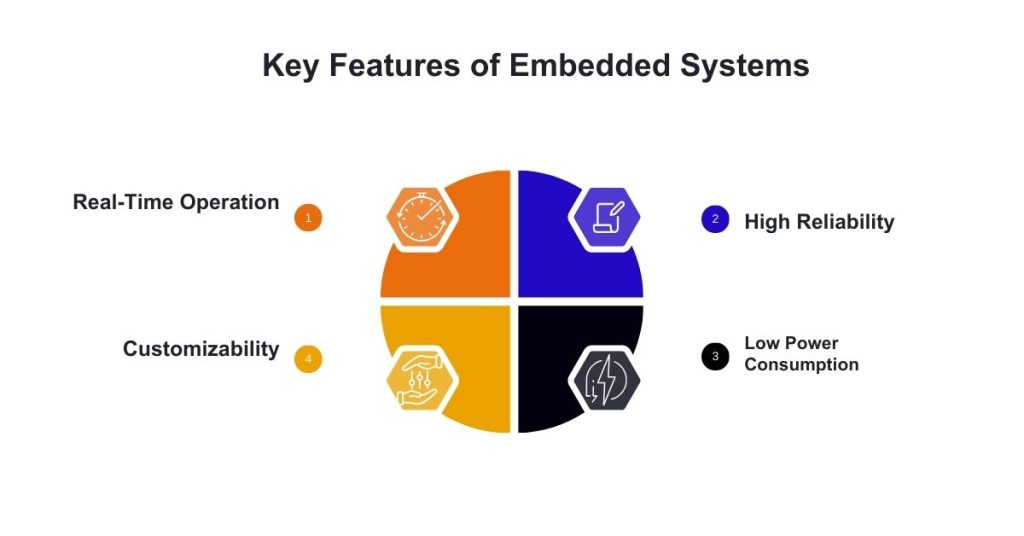
- Real-Time Operation: To provide prompt reactions to external inputs, many embedded systems are built for real-time performance.
- High Reliability: In crucial settings where failure is not an option, these systems are frequently used.
- Customizability: Embedded solutions can be tailored to particular activities and optimized for maximum effectiveness.
- Low power consumption: They are perfect for battery-powered gadgets because of their energy-efficient designs.
The Role of VLSI CAD in Embedded Solutions
Very large-scale integration (VLSI) involves creating integrated circuits (ICs) by combining thousands to millions of transistors onto a single chip. VLSI CAD tools are essential for designing these ICs and ensuring they meet the required specifications for embedded solutions. These tools simplify the complex chip design, verification, and testing process, enabling rapid prototyping and production.
VLSI CAD: Breaking Down the Basics
VLSI CAD encompasses a suite of software tools that assist engineers in:
- Schematic Design: Creating circuit diagrams and defining component connections.
- Layout Design: Translating schematics into physical layouts for fabrication.
- Simulation and Verification: Testing circuit behavior and performance before manufacturing.
- Physical Design Automation: Optimizing placement and routing of components on the chip.
- Power and Thermal Analysis: Ensuring the chip operates efficiently without overheating.
Synergy Between Embedded Systems and VLSI CAD
The intersection of embedded solutions and VLSI CAD lies in their shared goal of creating optimized, high-performance electronics. VLSI technology enables the miniaturization of hardware components, a critical factor for embedding sophisticated functionalities within compact devices. For instance:
- Smartphones: The integration of powerful processors, sensors, and communication modules in a small form factor is possible thanks to advanced VLSI design.
- IoT Devices: Energy-efficient chips designed using VLSI CAD tools power the Internet of Things (IoT) ecosystem, enabling seamless connectivity.
- Automotive Electronics: VLSI-based embedded systems ensure reliability and safety in applications like autonomous driving and collision avoidance systems.
Applications Driving the Future
- Artificial Intelligence (AI) and Machine Learning (ML) embedded solutions powered by VLSI-designed chips are at the forefront of AI and ML advancements. Dedicated hardware accelerators, such as GPUs and TPUs, are enabling faster computations for real-time applications like facial recognition and natural language processing.
- 5G and Beyond The rollout of 5G networks relies on VLSI technology to deliver high-speed, low-latency communication. Embedded systems with VLSI-designed RF modules and processors are critical for supporting this infrastructure.
- Healthcare Wearable health monitors, implantable devices, and telemedicine equipment benefit from the compactness and efficiency of embedded solutions and VLSI technology. These innovations are transforming patient care and diagnostics.
- Autonomous Systems From drones to self-driving cars, VLSI-powered embedded systems enable precise control and real-time decision-making, ensuring these systems operate reliably in dynamic environments.
Challenges in Embedded Systems and VLSI CAD
While the advancements are significant, there are challenges that developers and engineers face:
- Design Complexity: As functionalities increase, designing efficient and reliable systems becomes more complex.
- Power Management: Balancing performance and power consumption is critical, especially for portable devices.
- Fabrication Costs: The cost of fabricating advanced chips remains high, requiring careful optimization during the design phase.
- Integration Issues: Ensuring seamless hardware and software components integration can be difficult, particularly in multi-vendor environments.
Innovative Station: Providing the Best VLSI CAD Services
Innovative Station stands out as a premier provider of VLSI CAD services, offering:
- Expert Engineers: A team of highly skilled professionals dedicated to delivering top-notch solutions.
- Advanced Tools: Access to cutting-edge VLSI CAD tools that streamline the design process and enhance efficiency.
- Tailored Solutions: Custom workflows designed to meet unique business and project requirements.
- Commitment to Quality: Ensuring reliable and high-performance chip designs that exceed client expectations.
The Road Ahead
The future of embedded solutions and VLSI CAD is bright, with emerging technologies like quantum computing, neuromorphic chips, and advanced packaging techniques promising to revolutionize the industry. Collaborative efforts between hardware and software engineers, along with advancements in AI-driven design tools, will further accelerate innovation.
Conclusion
Embedded solutions and VLSI CAD are indispensable in shaping the technological landscape. From powering the devices we use daily to driving innovations in critical sectors, these technologies enable smarter, more efficient, and highly reliable systems. As the demand for sophisticated electronics grows, the synergy between embedded systems and VLSI CAD will continue to unlock new possibilities, making the impossible a reality.